
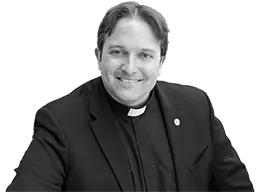
 Fr Matthew Charlesworth SJJesuit PriestSociety of JesusJesuit priest working in Southern AfricaFr. MatthewCharlesworthSJ
 Solemnity of Pentecost
Date: | Season: Easter | Year: A
First Reading: Acts 2:1–11
Responsorial Psalm: Psalm 104:1, 24, 29–31, 34
| Response: Psalm 104:30
Second Reading: 1 Corinthians 12:3b-7, 12-13
Gospel Acclamation: Come, Holy Spirit, fill the hearts of your faithful and kindle in them the fire of your love
Gospel Reading: John 20:19-23
Preached at: the Chapel of Emerald Hill Children’s Home in the Archdiocese of Harare, Zimbabwe.
The last time I was with you, this church was dark.
It was the Easter Vigil. We stood in the darkness and waited. Then the Easter Candle was lit. One flame entered the church, small at first, then strong enough to be shared. One candle lit another. Face after face came out of the dark. The church did not become bright all at once. It became bright because the light was passed on.
Now Eastertide comes to its close. From tomorrow, we return to Ordinary Time. The Easter Candle will no longer stand before us in quite the same way. But the light has not left the Church. It has been entrusted to us.
That is Pentecost: fifty days after Easter, the light of the risen Christ becomes fire in the Church.
Today is also the feast of our mother parish, Our Lady of the Wayside, so we are fewer here because many of our brothers and sisters are celebrating at Mount Pleasant. But that too belongs to Pentecost. We are not a scattered people. We are one Church, joined by one Spirit, sharing one light and one mission.
At Easter, Christ our Light rose from the tomb. At Pentecost, that light becomes fire in the Church. Not one great flame for a few important people, but many flames for the whole people of God. The Spirit gives gifts that shape the heart, and charisms that build up the Body. One Spirit. One Body. One mission.
In the Acts of the Apostles, the disciples are gathered in one place. We can imagine them still uncertain, still carrying fear in their bones. Then the Spirit comes like wind through a closed house, like fire resting on tired heads, like breath filling weak lungs. The disciples who were hiding begin to speak. People from many nations hear the good news in words they can understand.
That is the miracle. God does not make everyone speak one language. God helps everyone hear. At Babel, words were used to climb above others, and the result was confusion. At Pentecost, words are given so people may reach one another, and the result is communion.
This is how the Church is born: as a people learning to listen. This is synodality in plain language. We walk together. We listen before speaking. We make room for voices we might otherwise miss. The Spirit often speaks through the person we were not expecting to hear.
The Psalm gives us the prayer of the day: “Send forth your Spirit, O Lord, and renew the face of the earth.” The Spirit renews the earth by renewing people. He begins with small mercy: a kind word, an honest apology, a loaf of bread shared, a hand held at a bedside, a door opened to someone who feels forgotten.
Saint Paul tells us how this renewal works. No one can truly say “Jesus is Lord” except by the Holy Spirit. Faith itself is already the Spirit at work in us. Then Paul says there are different gifts, but the same Spirit; different kinds of service, but the same Lord; different works, but the same God. And he gives the reason: the gifts are given for the common good.
The Holy Spirit gives us wisdom, understanding, counsel, courage, knowledge, reverence, and wonder before God. These gifts shape the heart. They help us know what is right, choose what is good, and stay close to God. The same Spirit also gives charisms for service: in prayer and listening, in teaching and care, in hidden work and wise leadership.
No gift is too small when the Spirit uses it. But every gift must serve love. Wisdom without love can become cold. Courage without love can become harsh. Knowledge without love can become pride. Saint Ignatius reminds us that love is shown more in deeds than in words. The Spirit gives gifts so that love becomes real in the help we give, the people we serve, and the good we do.
Many of us received this Spirit in a clear and solemn way at Confirmation. Hands were laid upon us. We were anointed with chrism. We were sealed with the gift of the Holy Spirit. That was not only a ceremony from long ago. It was a commissioning, and every Pentecost calls us to renew it. God was saying: you have a part to play. Your faith is not only for private comfort. Your gifts are not only for your own success. The Spirit has been given to you for the Church and for the world.
So the same Spirit now asks us to speak truth with charity, to act with courage, and to use our gifts, talents, and charisms for the common good of society.
Paul says we are one body. A body cannot ignore one wounded part and call itself healthy. If the foot is hurt, the whole body limps. So the Church cannot say to the poor, “Your suffering is not ours.” We cannot say to the unemployed young person, “Your future is not our concern.” We cannot say to the elderly, “Your loneliness does not matter.” We cannot say to the child, “Your safety can wait.”
That matters in Zimbabwe, where public life needs trust, fairness, and care for families who struggle. Our bishops have spoken about Constitutional Amendment Bill No. 3. They have called leaders back to the common good, to public trust, to the people’s voice, and to the dignity of every citizen. This is not party politics. It is pastoral care. A shepherd must speak when the flock is in danger. Solidarity means seeking the good of all, not only the comfort of the powerful.
Tomorrow, Pope Leo XIV’s Magnifica Humanitas will place before the world the same question in a new field: will our most powerful tools, even artificial intelligence, serve the human person, protect the weak, and help build peace, without eclipsing our magnificent humanity? Pentecost gives the answer: every gift, every skill, every power must serve life, dignity, peace, and the common good.
In the Gospel, the disciples are behind locked doors.
Jesus comes and stands among them. His first word is not blame. He does not say, “Why did you run away?” He says, “Peace be with you.”
That peace is the first gift of the risen Lord. Peace with God. Peace with one another. Peace in the heart that has been shaken by fear.
Then Jesus shows them his hands and his side. The wounds are still there. The risen Lord does not pretend pain never happened. He carries the wounds, but they no longer have the last word.
Then he breathes on them and says, “Receive the Holy Spirit.”
It is creation beginning again. God once breathed life into dust. Now Christ breathes courage into frightened disciples. And he sends them: “As the Father has sent me, so I send you.” The Spirit is not given so they can remain safely indoors. The Spirit is given for mission: forgiveness, justice, the building of the Kingdom, and the love of one another as Christ has loved us. We are living persons, made in the image of God, and no tool, system, or power must ever eclipse that dignity.
So Pentecost is fire, but it is also peace. It is speech, but it is also listening. It is courage, but it is also love sent into the world: love that forgives, love that seeks justice, love that builds the Kingdom.
So let us pray:
Come, Holy Spirit. Enter our fear. Open our locked doors. Stir up the grace of our Confirmation. Use our gifts and charisms for the common good. Teach us to hear one another. Guide our Church as we walk together. Strengthen our bishops and all who speak for truth. Send us to the poor, the lonely, the young, the old, the wounded, and the weary. Renew our hearts, and through us, renew the face of the earth.
And I leave you with three questions you can take to your own prayer this week:
- Where does Jesus’ peace need to undo my fear this week?
- Which gift, talent, or charism am I using, or refusing to use, for the common good?
- Whom am I being sent to forgive, listen to, or serve in the power of the Holy Spirit?
Source: https://sj.mcharlesworth.fr/homilies/2026-05may-24-ya-et-pe/
This homily is shared for personal and pastoral use. Please attribute the author and do not alter the meaning when quoting. If you wish this homily to be translated - there is an option on the website which will allow you to translate it into the language of your choice.
Licenced under a Creative Commons Attribution-NonCommercial-NoDerivatives 4.0 International (CC BY-NC-ND 4.0) license.
The author does not speak for the Society of Jesus or for the Catholic Church.


In preparing this homily, I consulted various resources to deepen my understanding of today’s readings, including using Magisterium AI for assistance. The final content remains the responsibility of the author.