
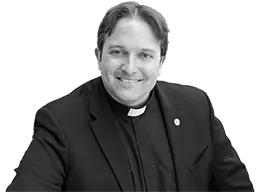
 Fr Matthew Charlesworth SJJesuit PriestSociety of JesusJesuit priest working in Southern AfricaFr. MatthewCharlesworthSJ
 3rd Sunday of Easter
Date: | Season: Easter | Year: A
First Reading: Acts 2:14, 22–33
Responsorial Psalm: Psalm 16:1–2, 5, 7–11
| Response: Psalm 16:11a
Second Reading: 1 Peter 1:17–21
Gospel Acclamation: Luke 24:32
Gospel Reading: Luke 24:13–35
Preached at: the Chapel of Emmaus House in the Archdiocese of Harare, Zimbabwe.
This Sunday’s Gospel gives us the familiar story of the disciples on the road to Emmaus. It is a journey on an actual road, yes, but it is also the journey of the heart: from sorrow to understanding, from confusion to recognition, from defeat to witness.
Two disciples are walking away from Jerusalem. They are not waiting at the tomb in hope. They are leaving. Their hopes had collapsed. They had trusted Jesus, and now it all seemed broken. That feeling is not foreign to us. Yesterday Zimbabwe marked forty-six years of independence, and such anniversaries stir both gratitude and disappointment: gratitude for freedom, and disappointment at how far hope still has to travel before it reaches every home, every young person looking for work, every family carrying strain and uncertainty. Yet the psalm speaks quietly into that weariness: “You will show me the path of life.” And on this road to Emmaus, that is exactly what the risen Lord begins to do.
And that is where Jesus meets them. Not when they are strong. Not when they are clear. Not when they have their theology in order. He meets them on the road, in their sadness, while they are trying to make sense of things. Jesus seeks us. He comes looking for his friends even when they are walking in the wrong direction.
But when he comes, they do not recognise him. Sorrow can narrow their vision. Disappointment can make the world smaller and lonelier. We can know all the facts and figures but still miss the meaning. The two disciples know what has happened, but they cannot yet see what God is doing. They speak of Jesus in the past tense. To them, the story is over.
So Jesus begins to heal them as he so often heals us: patiently, through the Scriptures. He listens first. He lets them speak. Then he opens the Word to them. He gathers up Moses and the prophets and shows them that God has not failed. What looked like defeat was not the end of the story. The cross was real, the grief was real, the loss was real, but God was still at work. God is still at work. As Peter says in the first reading, this Jesus whom men rejected, God raised up. That is the heart of Easter. Not that suffering is denied, but that death does not have the last word.
That is a word for us, and perhaps especially for us as religious. We can be near holy things and still grow tired. We can know the texts and yet lose the fire. We can say the prayers and still find disappointment sitting quietly in the room. Emmaus reminds us that the risen Lord still comes to us through the Word, not to flatter us, but to rekindle and encourage us. ‘Did not our hearts burn within us?’ That is not mere excitement. It is recognition. It is remembrance, perhaps, of our encounters during the Spiritual Exercises. It is the soul waking up again.
Then comes the breaking of the bread. In that simple act their eyes are truly opened. Not in spectacle. Not in some grand display. But at a table. In a blessing. In bread taken, broken, and given. Luke is teaching us something very plain and very deep: the risen Christ is known in Word and Sacrament, and he is known there in a way that sends us back to the world differently. With renewed hope and purpose.
That matters in our time. We live in a world at the moment that is so full of argument and bloodshed. We hear every day of war, rearmament, and leaders who speak as if peace were a weakness. Pope Leo XIV has been pleading that peace must not be reduced to a slogan, and that nations must choose the table of dialogue, not the logic of war. We should echo that prayer for peace simply and firmly. The risen Christ does not come to his disciples with vengeance in his hands. He comes with wounds, with Scripture, with bread, and with peace. If we belong to Him, then we cannot make our home in contempt. We cannot speak lightly of war. We cannot pray, “Stay with us,” and then refuse the hard work of reconciliation. God is not the mascot of any side, and we fall into idolatry when we dress up war as righteousness.
Saint Peter also reminds us that we were ransomed, not with silver or gold, but with the precious blood of Christ. Human life, then, is not cheap. It cannot be spent carelessly in war, crushed by indifference, or reduced to a number. If we belong to the risen Christ, we must become servants of life and servants of peace.
Notice what happens to the disciples on the road. Once their eyes are opened, they rise and go back. They become witnesses. They do not remain in Emmaus, folded in on themselves. They return to Jerusalem with the good news.
That is our calling too. To let Christ find us. To let his Word correct us. To let the bread of life open our eyes. And then to go back, quietly but bravely, to the places where hope has thinned out, and say by our lives that Jesus Christ is risen.
So perhaps the prayer for this Sunday is a simple one: Lord, walk with us on the road when we are disappointed. Open the Scriptures to us when our minds are tired. Stay with us at table when evening falls. And make us, in a wounded world, servants of your peace.
And perhaps we can meditate on these three questions in our prayer this morning:
- Where am I walking away in disappointment, and where might Christ already be walking beside me?
- What word of Scripture is the Lord using now to set my heart burning again?
- At what table, in what conversation, in what community, is Christ asking me to become a little more peaceful, a little more hopeful, and a little more free?
Source: https://sj.mcharlesworth.fr/homilies/2026-04apr-19-ya-et-03/
This homily is shared for personal and pastoral use. Please attribute the author and do not alter the meaning when quoting. If you wish this homily to be translated - there is an option on the website which will allow you to translate it into the language of your choice.
Licenced under a Creative Commons Attribution-NonCommercial-NoDerivatives 4.0 International (CC BY-NC-ND 4.0) license.
The author does not speak for the Society of Jesus or for the Catholic Church.





In preparing this homily, I consulted various resources to deepen my understanding of today’s readings, including using Magisterium AI for assistance. The final content remains the responsibility of the author.