
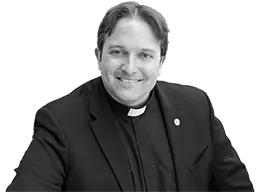
 Fr Matthew Charlesworth SJJesuit PriestSociety of JesusJesuit priest working in Southern AfricaFr. MatthewCharlesworthSJ
 2nd Sunday of Easter
Date: | Season: Easter | Year: A
First Reading: Acts 2:42–47
Responsorial Psalm: Psalm 118:2–4, 13–15, 22–24
| Response: Psalm 118:1
Second Reading: 1 Peter 1:3–9
Gospel Acclamation: John 20:29
Gospel Reading: John 20:19–31
Preached at: the Chapel of Emmaus House in the Archdiocese of Harare, Zimbabwe.
We are ending the Easter Octave. But Easter is not over. The Easter Season goes on. Today we also remember Divine Mercy Sunday.
Today’s Gospel gives us one strong picture: locked doors and open wounds.
The disciples are in a room together. The door is locked. They are afraid. They do not know what will happen next. They love Jesus, but they are scared.
Then Jesus comes.
He does not wait for them to be brave. He does not wait for them to open the door. He comes while they are still afraid. And the first thing he says is, “Peace be with you.”
That peace is a gift. Jesus is not just saying hello. He is giving them peace in their hearts. He knows pain. He knows fear. He knows suffering. So when he says, “Peace be with you,” his words are real and strong.
Then Jesus shows them his hands and his side. He shows them his wounds.
This is very important. Jesus is risen, but his wounds are still there. Easter did not make them disappear. But now the wounds are different. They are not signs of defeat. They are signs of love. They show how much Jesus loves us.
So here is the Gospel in one picture: locked doors and open wounds.
The disciples close the door. Jesus opens his wounds.
The disciples are afraid. Jesus gives peace.
The disciples hide. Jesus comes close.
This is what mercy looks like. Mercy is love that stays open. Mercy is love that does not run away.
That is why today is called Divine Mercy Sunday. God’s mercy is right here in this Gospel. Jesus comes back to the friends who failed him. He does not shame them. He does not scold them. He gives them peace. He shows them mercy.
Then Jesus does something more. He breathes on them and gives them the Holy Spirit—and with that Spirit he sends them to forgive. So peace is not only for staying calm—peace is something they do, by forgiving. Jesus gives them peace, and then sends them to bring peace to others.
That is what we see in the first reading too. The first Christians stay together. They pray together. They eat together. They share what they have. They help the poor. They care for one another. This is what the risen Jesus does. He makes a people who live in love together.
That matters for us in a small community. In a small group, we notice things. We notice when someone is sad. We notice when someone is quiet. We notice when someone is hurt. Sometimes the locked doors in a community are not real doors. Sometimes they are in the heart. A person can become closed, tired, or hurt inside.
But Jesus still comes through locked doors.
He comes with peace.
He comes with mercy.
He comes to begin again.
We also need peace in our world. Peace is not pretending that everything is fine. Peace is not being silent because we are afraid. Peace is being truthful without being cruel. Peace is being calm without giving up. Peace is always refusing hatred and violence.
The Church is praying for peace at the moment, because Jesus still wants to give us peace today. That fits this Gospel very well. Jesus came to his frightened friends and gave them peace. We can ask for that peace too.
So let us pray the prayer that Pope Leo prayed yesterday:
Lord Jesus,
you conquered death without weapons or violence:
you shattered its power with the strength of peace.
Grant us your peace,
as you did to the women filled with doubt on Easter morning,
as you did to the disciples who were hiding in fear.
Send forth your Spirit,
the breath that gives life and reconciles,
that turns adversaries and enemies into brothers and sisters.
Inspire in us to trust in Mary, your mother,
who stood at the foot of your cross with a broken heart,
firm in the faith that you would rise again.
May the madness of war cease
and the Earth be cared for and cultivated by those who still
know how to bring forth, protect and love life.
Hear us, Lord of life!
Then we hear about Thomas. He was not there the first time. He missed it. The others told him that they had seen Jesus. But Thomas found it hard to believe.
So what does Jesus do? He comes back for Thomas.
That is very beautiful. Jesus does not forget him. Jesus does not shame him. Jesus comes back and invites him closer. He says, “Put your finger here.”
He invites him closer and shows him his wounds.
Jesus knows that Thomas is struggling. And Jesus is patient with him.
Then Thomas sees Jesus and says, “My Lord and my God.”
Thomas teaches us something important. When we struggle, Jesus does not push us away. He comes closer. He helps us. He meets us where we are.
So the message today is simple.
When we lock the door, Jesus still comes.
When we are afraid, Jesus still speaks peace.
When we are wounded, Jesus still shows us love.
When we fail, Jesus still shows mercy.
When we are weak, Jesus still gives us his Spirit.
And then he sends us out to forgive, to love, and to live in peace.
So this week, let us ask ourselves three simple questions:
- What door in my heart is still locked?
- What hurt in me needs the mercy of Jesus?
- How can I bring peace to someone this week?
Source: https://sj.mcharlesworth.fr/homilies/2026-04apr-12-ya-et-02/
This homily is shared for personal and pastoral use. Please attribute the author and do not alter the meaning when quoting. If you wish this homily to be translated - there is an option on the website which will allow you to translate it into the language of your choice.
Licenced under a Creative Commons Attribution-NonCommercial-NoDerivatives 4.0 International (CC BY-NC-ND 4.0) license.
The author does not speak for the Society of Jesus or for the Catholic Church.





In preparing this homily, I consulted various resources to deepen my understanding of today’s readings, including using Magisterium AI for assistance. The final content remains the responsibility of the author.