
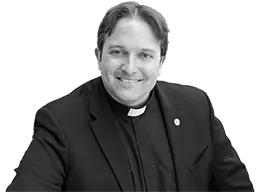
 Fr Matthew Charlesworth SJJesuit PriestSociety of JesusJesuit priest working in Southern AfricaFr. MatthewCharlesworthSJ
 Mass of the Lord's Supper
Date: | Season: Sacred Paschal Triduum | Year: A
First Reading: Exodus 12:1–8, 11–14
Responsorial Psalm: Psalm 116:12–13, 15–16c, 17–18
| Response: 1 Corinthians 10:16
Second Reading: 1 Corinthians 11:23–26
Gospel Acclamation: John 13:34
Gospel Reading: John 13:1–15
Preached at: the Chapel of Emerald Hill Children’s Home in the Archdiocese of Harare, Zimbabwe.
My brothers and sisters,
Tonight we gather to celebrate the Mass of the Lord’s Supper, and we are asked to remember the great gifts that God has given us. This Mass begins our Sacred Paschal Triduum, the holiest days of the year, and it asks us to remember three things in particular: the priesthood, the Eucharist, and a love that is stronger than death. These are the three things I would like us to think about this evening.
So we remember, in a special way tonight, that this feast begins with service.
In our Gospel, Jesus shows us this by washing His disciples’ feet. Instead of giving us the words of institution, John shows us what the Eucharist is meant to do in us. It is meant to change us, and help us become what we receive.
When we receive Christ’s Body and Blood in communion, we must also learn to live as He lived. Jesus is the perfect example of the priesthood. This priesthood is shared by all the baptised, and it is marked by humble service. Jesus did not exclude people or become small-hearted in His love. He served all, but especially those who were left out and left alone.
When Peter protests, we glimpse something of his pride. He does not want to admit that he needs to be washed. But the Lord insists. Peter must learn to accept salvation on the Lord’s terms, not his own. He must learn that love begins not with what he can do for Jesus, but with what Jesus is willing to do for him. And perhaps that is true of us too. We want God’s love, but often on our own terms. We want mercy without humility. We want grace without surrender. We want a God who loves us, but not always a God who loves the people we struggle to love. Yet the Lord who kneels before Peter is the same Lord who kneels before the others too. He washes not only the feet we admire, but also the feet we would rather avoid. Baptism has made us His own, but as we walk through the world, our feet still gather dust, and we still need His mercy.
So let us ask ourselves how we live this calling. Each of us is baptised, and each of us is called to serve. How do we serve each other?
A priesthood, and especially the ordained priesthood, must always be one of service. It builds on the common priesthood but does not replace it. The priesthood of all believers is a sign in the Church to remind all of us who are ordained to stay true to that calling.
How important it is in Zimbabwe today for all of us Christians to remember that true calling. We have seen what happens when people forget to serve each other, when power becomes too important, when those entrusted to serve place themselves above the common good, and when ordinary people are left to carry the burden. As conflict spreads in the Middle East, it is often the poor in places like Southern Africa who feel the cost in fuel, fertiliser, food, and the daily struggle of family life.
How quickly things fall apart when we stop serving and start grasping. But Jesus came to heal us and bind our wounds. Let us remember tonight and recommit ourselves to a life of service, not just in our private lives, but in our public ones too.
And here in this community perhaps we understand that calling with particular force. Many of our children have known loss too early. Many of our elderly have carried more than their years should have asked of them, becoming mothers and fathers again to those left behind. So when the Lord kneels to wash feet, this is not a small or distant gesture. It is the Lord showing us the shape of love in a wounded world. It is the Lord telling us that no one here is forgotten.
We are also called tonight to remember, secondly, the Eucharist. We celebrate the Eucharist week after week, and sometimes we forget the significance of what we are doing. But tonight we remember its true purpose.
In our first reading from the Book of Exodus, the Passover is described as a memorial feast for all generations. The sacrifice and eating of the lamb symbolised liberation from Egypt, and the blood on the doorposts was a sign of protection from evil and death. Our Eucharist, when we receive the Body and Blood of Christ, is meant to heal, liberate, and protect us. It is intended as a feast for us all, and, as Pope Francis memorably said, it is medicine for the weak, not a prize for the perfect.
And yet even this story of liberation reminds us how wounded the human heart can be. We know how quickly suffering can harden into hatred, and how easily people can turn an enemy into something less than human. So tonight we remember that God does not save us only from oppression around us, but also from the sin within us, from the harshness, fear, and violence that can take root in the human heart.
In our second reading, we hear that this is something we do in remembrance of Him. At each Eucharistic celebration, the bread is broken and shared, and the cup is poured out in remembrance of Jesus. But not just for us to remember. It is also for us to proclaim, so that others might know the sacrifice of Christ, who gives us Himself so that we too might have life.
And St Paul reminds us that this mystery can never be separated from the way we treat one another. Even in Corinth, people came to the Lord’s table while neglecting the poor and wounding the body of Christ in each other. To receive His Body while ignoring His people is to miss the meaning of the gift.
How do we receive it? Are we grateful for it? Can we allow it to transform our hearts and minds?
For many people here, the Eucharist is not only a devotion, it is strength. It is food for those who are tired, consolation for those who grieve, and hope for those who worry about tomorrow. In uncertain times, when life feels heavy and daily needs become more difficult to meet, the Eucharist reminds us that God has not abandoned His people. He still feeds us. He still stays with us.
Jesus washed His disciples’ feet to show us how much He loved us. It was not only in giving Himself up to death, but also in leaving us the Eucharist and the example of service, that we can truly understand how Christ loved the world. And after this meal He will go to Gethsemane, where the courage of His love will be revealed.
St Ignatius said that love shows itself more in deeds than in words. When we celebrate tonight and recall the institution of the Eucharist, we are given not just words, but concrete actions to follow. We share bread and wine that become Christ’s Body and Blood. But we also wash each other’s feet to remind us of the service we are all called to. And we ask ourselves: how do we give ourselves? How do we love?
Because finally, the thing we must all remember this evening is that God loved us first. We all try to love God, but our loving Him is a response to His having loved us first.
There is a beautiful meditation in Ignatian spirituality, and I would like to invite you to try it tonight.
Imagine the Trinity looking down on creation and seeing the world.
The world as good but hurting.
The world as beautiful, but broken.
The world as you and me, and each of our friends and families.
But the Trinity sees the whole world.
They see all time.
They see the child who feels alone.
They see the grandparent who is weary.
They see families struggling with rising prices.
They see nations at war.
They see the suffering in the Middle East, and across our own continent.
They see our wonder too,
even in the human journey that began last night toward the moon.
They see our own country too, with its hopes and its wounds.
And they decide that they want to come to earth,
to become human,
to save the world from itself.
And so the Son comes to earth,
even though He knows how He must leave it, He comes.
God becomes man,
and we celebrate that incarnation at Christmas.
But tonight we celebrate not only the purpose of God’s coming,
but also we say thank you for His coming
and thank you for giving Himself to us.
He came for each one of us
and He leaves us ways to remember Him.
In Mass each week,
at Communion,
in the Scriptures,
and in each other,
we can find God.
Because He loved us.
He loved me, and He loved you.
He loved the child who has lost parents.
He loved the old man and the old woman who now carry a family in their hands.
He loved those who are frightened.
He loved those who do not know how they will cope.
Acknowledge that love tonight.
Think about it.
Treasure it.
Keep it.
Believe it.
Because God loved you so much that He came to take away your sin, and to leave you the sacraments that offer grace and forgiveness, mercy and redemption, friendship with God, and a sure way to salvation with Him.
I invite you to offer to God this evening everything that holds you back from loving Him. Allow Him to free you. Allow Him to help you. Allow Him to love you so that you truly experience that love.
When you receive communion, do so freely and in grateful remembrance of all the good things God has done in your life. As you celebrate God’s gifts to you, imitate Him in your dealings with others so that the love He has for you can become the love you have for other people, and let this love be shown in service.
Now let us, with that love of God fresh in our minds, recall the ritual of service that we read about this evening. Let us wash each other’s feet. We cannot all do that now, but I invite you to pray for those whose feet you need to wash this evening. Pray for them, and for a conversion in their lives and yours, so that they might experience the love of God as you have this evening, and that you may both answer that call to love each other.
Amen.
Source: https://sj.mcharlesworth.fr/homilies/2026-04apr-02-ya-pt-ht/
This homily is shared for personal and pastoral use. Please attribute the author and do not alter the meaning when quoting. If you wish this homily to be translated - there is an option on the website which will allow you to translate it into the language of your choice.
Licenced under a Creative Commons Attribution-NonCommercial-NoDerivatives 4.0 International (CC BY-NC-ND 4.0) license.
The author does not speak for the Society of Jesus or for the Catholic Church.





In preparing this homily, I consulted various resources to deepen my understanding of today’s readings, including using Magisterium AI for assistance. The final content remains the responsibility of the author.