
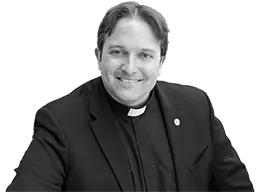
 Fr Matthew Charlesworth SJJesuit PriestSociety of JesusJesuit priest working in Southern AfricaFr. MatthewCharlesworthSJ
 Monday of the 6th Week in Ordinary Time
Date: | Season: Ordinary Time before Easter | Year: A
First Reading: James 1:1–11
Responsorial Psalm: Psalm 119:67–68, 71–72, 75–76
| Response: Psalm 119:77a
Gospel Acclamation: John 14:6
Gospel Reading: Mark 8:11–13
Preached at: the Chapel of Emmaus House in the Archdiocese of Harare, Zimbabwe.
In a recent interview, former US President Barack Obama observed that it is easy to speak about free speech and human dignity when a country is at peace. It is much harder to defend those same values when they are under pressure. That insight opens today’s readings. Human dignity, rooted in our being made in the image of God, does not disappear when circumstances worsen. It is tested, but it remains. Faith is simple when life is calm. It is tested when we are criticised, when money is short, when illness comes, when the Church is questioned. The Word of God today tells us three clear things. Do not waste your trials. Ask for wisdom. Do not demand signs when God is already at work.
James writes to believers scattered and under strain. He calls them “brothers and sisters.” He corrects them, but as family. Then he says something strong: when trials come, consider it joy, because testing produces endurance, and endurance makes you mature.
He is not praising suffering. He is describing growth. Anyone who has tried to remain faithful in marriage, to raise children well, to keep a business honest, or to serve in a parish with few resources knows this truth. Pressure reveals what we are made of. It can shrink us. It can also stretch us. The Psalm says it plainly: “It was good for me to be afflicted, so that I might learn your statutes.” Some lessons are only learned in difficulty.
In Zimbabwe many families live with uncertainty. Prices rise. Work is fragile. Young people leave home searching for opportunity. When security weakens, our sense of control weakens with it. Yet our dignity does not weaken. We remain made in God’s image. Trials do not reduce our worth. They refine our faith. Endurance is not passive. It is choosing fidelity when it would be easier to give up.
James then tells us to ask for wisdom. Not intelligence. Not more information. Wisdom is knowing how to live rightly when the path is unclear. It is choosing fairness when bribery is common. It is speaking truth without hatred. It is refusing despair when progress is slow.
He warns us not to be like a wave driven by the wind. We recognise that in ourselves. One success and we feel confident. One setback and we lose heart. One rumour and we are unsettled. Wisdom anchors us because it rests on God, not on shifting events. And James says God gives this gift generously, if we ask in trust.
He also speaks about the poor and the rich. The poor are to recognise their high place before God. The rich are to remember how quickly wealth fades. In a country where fortunes can change suddenly, this is not just theoretical. Money can disappear. Status can evaporate. Only our relationship with God endures.
This is not a romantic view of poverty. It is a reminder that dignity is not measured by income. No one has more intrinsic worth than another. The poor person in a rural village and the executive in a city office stand equal before God. If we follow Christ, we cannot ignore the struggling family, the unemployed graduate, the elderly person left alone. Their dignity calls us to justice and to concrete care.
In the Gospel, the Pharisees ask Jesus for a sign from heaven. He has just fed thousands. Hungry people have eaten. Yet they demand more. They want proof on their terms.
Jesus sighs. He refuses. He will not turn faith into a display. His life is already the sign. The problem is not lack of evidence, but closed hearts.
We can be similar. “Lord, fix this first. Remove this problem. Then I will believe.” But often the sign is already present. A neighbour who shares food. A parish that holds together in difficulty. Bread and wine placed on this altar. Through these humble signs Christ truly meets us. Not with spectacle, but in reality. Not with noise, but in quiet presence.
So the message is clear. When your values are tested, hold them. When trials come, let them deepen you. When you lack clarity, ask for wisdom. When you look for signs, open your eyes to what God is already doing.
As we begin this week, let us pray with three questions:
- Where in my present struggles is God forming endurance rather than blocking my plans?
- Where do I need wisdom so that I am not driven by fear or mood?
- What quiet signs of God’s presence have I overlooked, and how can I respond with trust?
Source: https://sj.mcharlesworth.fr/homilies/2026-02feb-16-ya-ot-06/
This homily is shared for personal and pastoral use. Please attribute the author and do not alter the meaning when quoting. If you wish this homily to be translated - there is an option on the website which will allow you to translate it into the language of your choice.
Licenced under a Creative Commons Attribution-NonCommercial-NoDerivatives 4.0 International (CC BY-NC-ND 4.0) license.
The author does not speak for the Society of Jesus or for the Catholic Church.
 Receive updates on:
WhatsApp | Telegram | Signal
In preparing this homily, I consulted various resources to deepen my understanding of today’s readings, including using Magisterium AI for assistance. The final content remains the responsibility of the author.