
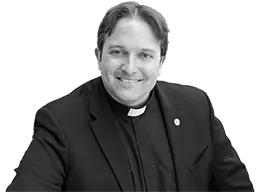
 Fr Matthew Charlesworth SJJesuit PriestSociety of JesusJesuit priest working in Southern AfricaFr. MatthewCharlesworthSJ
 Wednesday of the 5th week in Ordinary Time
Date: | Season: Ordinary Time before Easter | Year: A
First Reading: 1 Kings 10:1–10
Responsorial Psalm: Psalm 37:5–6, 30–31, 39–40
| Response: Psalm 37:30a
Gospel Acclamation: John 17:17ab
Gospel Reading: Mark 7:14–23
Preached at: the Chapel of Emmaus House in the Archdiocese of Harare, Zimbabwe.
Brothers and sisters,
The Queen of Sheba arrives with questions and with caution. She wants to see for herself whether Solomon is as wise as people say. She watches closely. She listens. What convinces her is not only his answers, but the whole way things are done around him. The order of his court. The care taken with worship. The sense that wisdom shapes daily life. She leaves saying that what she heard did not come close to what she saw.
That scene matters today because it reminds us that faith is not mainly about ideas. It shows itself in how a community is governed and cared for. Rulers who rule wisely do not rule for display or gain. They endeavour to increase the common good. Their choices widen access, protect the vulnerable, and make shared life more just. The psalm speaks plainly. Place your life in the Lord’s hands and trust him. The just person carries God’s law in the heart, not just in the head, and that inner compass keeps them from losing their way.
Jesus speaks into that same space in the Gospel. People are anxious about what makes them clean or unclean, about rules that have shaped their identity for generations. Jesus does not mock those rules. He goes deeper. As today’s Gospel shows, the Pharisees fixate on washed hands and outward practice, but Jesus reveals the harder truth: it is what comes out of a person that defiles. Food passes through the body. It never reaches the heart. What harms us most comes from within. Greed. Deceit. Envy. Pride. Cruelty. These grow when the heart is left unattended.
This teaching unsettles even his own disciples. Mark places it between two shared meals, one among Jews and one among Gentiles, to show that a shift is under way. God is widening the table. The old rules once protected a people. Now they risk becoming walls. Jesus is not lowering expectations. He is changing the measure. True righteousness is not achieved by adding more rules. It is received as grace and shown in a life shaped by love. As the psalm tells us today, the just have God’s law in their hearts, and their steps are held firm by the Lord.
What Jesus names so plainly is uncomfortable because it puts the work back into our own hands and hearts. It is easier to argue about customs than to face what lives within us. Washed hands are visible. A clean heart is not. Yet Jesus insists that this is where God looks. Not at our compliance, but at our compassion. Not at how carefully we manage our image, but at whether mercy has room to move inside us. A heart shaped by God’s grace does not ask first, “Have I done enough?” It asks, “Who is being left out, and how do I draw nearer?” That is the quiet labour of conversion, and it takes time, patience, and honesty before God.
So when Jesus speaks about purity, he is not offering a narrow or anxious idea. A pure heart is not one that has never struggled, never been tempted, or never fallen. Too often we reduce purity to one issue, to pornography or sexual failure alone, and we miss the larger picture. A pure heart is one that is learning how to see others as persons, not as objects, not as threats, not as means to an end. It is a heart that can stay present in relationships, that can feel desire without letting desire rule, that can notice suffering and respond with compassion rather than indifference. Impurity, as Jesus names it, is not simply about what we look at, but about who we refuse to love. A pure heart grows when we allow God to heal how we relate, how we look, how we listen, and how we choose to act for the good of others.
That matters deeply today as we mark the World Day of Prayer for the Sick. Illness strips life back to what matters. Many people around us live close to sickness every day. Clinics without enough medicine. Long journeys for treatment. Families caring for the ill with little support. It is easy to turn away. Jesus does not. He looks at the heart and stays close.
Places like Lourdes remind us of this. People arrive carrying pain and hope together. They are not promised quick fixes. They are met with prayer, presence, and care. Healing there is often quiet. Sometimes it is simply the strength to endure, to forgive, to trust again.
The Queen of Sheba praised God for giving Israel a king who could rule with justice. In Jesus, God goes further. He places that work inside us. Practices like fasting or abstinence still matter, but only when they open us to love. Without charity, they harden us. With grace, they soften us.
As we come to the altar today, we do not bring perfection. We bring what is real. Christ places his life into our hands so that our hearts, not just our habits, may be changed.
As we remain with the Lord after Communion this morning, ponder these three questions:
- Where am I more concerned with rules than with care for people?
- What habit of the heart is Jesus asking me to face honestly?
- Who among the sick or forgotten is God asking me to draw closer to this week?
Source: https://sj.mcharlesworth.fr/homilies/2026-02feb-11-ya-ot-05/
This homily is shared for personal and pastoral use. Please attribute the author and do not alter the meaning when quoting. If you wish this homily to be translated - there is an option on the website which will allow you to translate it into the language of your choice.
Licenced under a Creative Commons Attribution-NonCommercial-NoDerivatives 4.0 International (CC BY-NC-ND 4.0) license.
The author does not speak for the Society of Jesus or for the Catholic Church.
 Receive updates on:
WhatsApp | Telegram | Signal
In preparing this homily, I consulted various resources to deepen my understanding of today’s readings, including using Magisterium AI for assistance. The final content remains the responsibility of the author.