
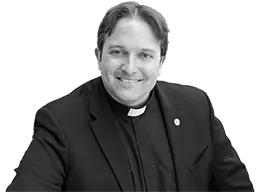
 Fr Matthew Charlesworth SJJesuit PriestSociety of JesusJesuit priest working in Southern AfricaFr. MatthewCharlesworthSJ
 Memorial of St John Bosco, priest
Date: | Season: Ordinary Time before Easter | Year: A
First Reading: 2 Samuel 12:1–7a, 10–17
Responsorial Psalm: Psalm 51:12–17
| Response: Psalm 51:12a
Gospel Acclamation: John 3:16
Gospel Reading: Mark 4:35–41
Preached at: the Chapel of Emerald Hill Children’s Home in the Archdiocese of Harare, Zimbabwe.
This morning David is told a story about injustice. A poor man owns one lamb. It eats from his plate, sleeps near him, and is part of the household. A rich man, with many animals, takes that lamb for himself. David reacts strongly. He speaks about justice and punishment. Then Nathan says the words that stop him: You are the man.
David recognises himself. He does not argue or explain. He does not shift the blame. He says, I have sinned against the Lord. That honesty changes the direction of the story. Nothing moves until the truth is faced.
This is not only about David. It is easy to speak clearly about what is wrong in the world, in leaders, in the Church, even in our communities. It is harder to notice where the same habits are present in us. Often, what angers us most in others is what we struggle to admit in ourselves. God’s word has a way of turning our judgement back toward our own hearts.
Psalm 51 gives us the prayer that follows. Create in me a clean heart, O God. Not a perfect heart. Not a heart that hides. A clean one. David understands that God is not interested in appearances. God wants truth. A heart that is open and ready to change.
In the Gospel, the disciples cross the lake at night. A storm comes quickly. Water pours into the boat. They fear for their lives. Jesus is asleep.
He sleeps at the stern, the place where the one in charge would normally be. From the disciples’ point of view, the one who should be guiding them seems unaware and unconcerned. They wake him and say, Do you not care if we are perishing?
There is an older story behind this one. Jonah also slept in a boat while a storm threatened to destroy it. Jonah was thrown into the sea so that others might live. Jesus will one day give himself, not to calm one storm, but to face sin and death themselves.
Jesus stands and speaks to the wind and the sea. Be quiet. Be still. The storm stops. The water settles. Then he turns to the disciples and asks, Why are you afraid? Have you no faith?
They do not answer him. Instead, they ask each other, Who is this?
In the Scriptures of Israel, only God commands the wind and the sea. Job is reminded that these forces lie beyond human control. When Jesus speaks and they obey, the question becomes unavoidable. Who is this man who acts with God’s authority?
This moment does not stand alone. In Mark’s Gospel, Jesus is shown again and again as having authority over sickness, over evil, and even over death. The calming of the sea is part of that larger picture. The disciples are being prepared for what lies ahead, and for the work they will be sent to do.
In the early Church, the boat was often an image of the Christian community. A small group, exposed, moving forward together, carrying Christ into uncertain places. The boat is not meant to stay on the lake. It is heading toward the far shore, toward those who have not yet heard.
That image still fits. The Church today can feel fragile. Communities can feel anxious. Even people of faith can feel tired and unsure how to move forward. Christ can seem silent. The Gospel does not deny this experience. It tells us that Christ is still present, even when he does not act as we expect.
Jesus’ calm shows us something about God. God is not shaken by what unsettles us. God is not absent, even when God is quiet. Faith does not mean preventing storms. It means trusting who is with us.
Today we remember John Bosco. He worked with young people whose lives were unsettled and often harsh. He did not begin with condemnation. He stayed with them. He believed that God was already at work, even when nothing looked settled. He brought order and hope through patience, structure, and care.
Taken together, these readings ask for honesty and trust. To let God name what needs to change in us. To speak truth without defence. To pray plainly when we are afraid. And to remain faithful when God seems silent.
As you pray this morning you might sit with these questions.
- Where might God be drawing my attention to something in myself that needs honesty rather than defence?
- What is it, exactly, that I am afraid of when Jesus asks, Why are you afraid?
- Who is Jesus for me, really, when even the wind and the sea obey him?
Let us always remember that Christ does not leave the boat.
Source: https://sj.mcharlesworth.fr/homilies/2026-01jan-31-ya-ot-03/
This homily is shared for personal and pastoral use. Please attribute the author and do not alter the meaning when quoting. If you wish this homily to be translated - there is an option on the website which will allow you to translate it into the language of your choice.
Licenced under a Creative Commons Attribution-NonCommercial-NoDerivatives 4.0 International (CC BY-NC-ND 4.0) license.
The author does not speak for the Society of Jesus or for the Catholic Church.





In preparing this homily, I consulted various resources to deepen my understanding of today’s readings, including using Magisterium AI for assistance. The final content remains the responsibility of the author.