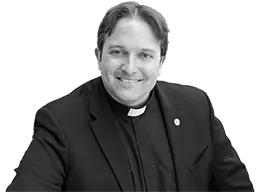
 Fr Matthew Charlesworth SJJesuit PriestSociety of JesusJesuit priest working in Southern AfricaFr. MatthewCharlesworthSJ
 3rd Sunday in Ordinary Time
Date: | Season: Ordinary Time before Easter | Year: A
First Reading: Isaiah 8:23–9
Responsorial Psalm: Psalm 27:1, 4, 13–14
| Response: Psalm 27:1a
Second Reading: 1 Corinthians 1:10–13, 17
Gospel Acclamation: Matthew 4:23
Gospel Reading: Matthew 4:12–23
Preached at: the Chapel of Emmaus House in the Archdiocese of Harare, Zimbabwe.
Jesus begins his public ministry at a dangerous moment. John has been arrested. A voice has been silenced. The preacher who spoke truth in the wilderness has been removed, and everyone knows what that means. When truth-tellers are taken away, fear spreads quickly. Others learn the cost of speaking. Power has drawn a line. It is at that moment, Matthew tells us, that Jesus goes to Galilee. Not to hide. Not to wait. He goes straight into a region marked by poverty, suspicion, and neglect. The light Isaiah promised does not appear in places of safety or control. It appears where hope has been worn thin, and where faith has learned to survive quietly.
We saw something of the cost and necessity of truth telling on the world stage this week in Davos. At the World Economic Forum, Prime Minister Mark Carney of Canada looked world leaders in the eye and said plainly that we live in an age where “the strong do what they can, and the weak suffer what they must,” a line he quoted from Thucydides to name the peril of power without restraint. Then he reminded them of Václav Havel’s greengrocer, who every morning placed a sign in his window reading “Workers of the world unite,” even though he did not believe it and no one else did. A sign, Havel said, of a life lived within a lie. And Carney invited leaders to take that sign down, to stop pretending and face reality with honesty. That speech mattered because it reminded the international community that lies corrode trust, and that silence in the face of falsehood is never neutral. The same challenge meets us closer to home. There are signs we keep in our own windows. Stories we repeat. Injustices we learn to live with. Truth telling always carries a cost, whether in global forums or in our own country, our own institutions, our own hearts.
Isaiah names those shadowed places without softening them. The places where truth is avoided, where burdens are carried quietly, where people learn to survive by keeping their heads down. Zebulun. Naphtali. Borderlands. Areas passed through but rarely honoured. Far from Jerusalem. Far from the centre of religious respectability. He says the people are walking in darkness. He says they are bent under heavy burdens. And then he says something unexpected. He says light breaks out there. Joy rises there. Freedom begins there. Not because the people have improved, but because God has decided to act. God does not wait for strength. God comes to weakness. Jesus does not drift into Galilee by accident. He chooses it.
That is why this Sunday matters so much. It is the Sunday of the Word of God. And the Word of God is not only a book, even a holy one. The Word is Scripture proclaimed in the assembly, yes, but it is also the living Word, the incarnate Son himself. When Scripture is read with faith, Christ is present and speaking. The Word does not only tell us about God. The Word brings God close. Sometimes as comfort. Sometimes as disturbance. Often as a sentence that stays with us long after the page is closed. If we let it dwell in us, it slowly shapes how we live and how we remain with the Lord.
The psalm gives us the right language for this. “The Lord is my light and my salvation.” Not an idea. Not a memory. A presence. Light is something God gives in the middle of trouble, not only after it has passed. And the psalm also says, “Wait for the Lord.” Waiting here does not mean giving up. It means staying open. Staying rooted. Refusing to believe that darkness has the final word.
This is why today we also remember people living with Hansen’s disease. For centuries, leprosy meant being pushed away. Not touched. Not listened to. Treated as a danger rather than a neighbour. Outcast. Even now, many carry shame long after the illness itself is cured. When the Word becomes flesh and walks into Galilee, it walks towards people like that. Towards those who have been avoided. The Word restores more than health. It restores dignity. It restores belonging.
Then Jesus speaks. His message is brief and demanding. “Repent, for the kingdom of heaven has come near.” Repent does not mean simply feeling bad. It means turning around. Changing direction. Learning to see life differently. The kingdom of God is not far away. It is close. It is God’s way of living being offered here and now. A way where mercy matters more than power. Where people matter more than profit. Where no one is treated as disposable.
This call to repentance is not private. It reshapes how we live together. It touches how we treat the poor, the sick, the unemployed, the young who feel stuck, the families under strain, even ourselves. To welcome God’s reign means choosing a different way of relating to one another and oneself. It means taking down signs that deny dignity. It means refusing to live comfortably inside lies.
Then Jesus calls the fishermen. He does not call them in a holy place. He calls them at work. With nets in their hands. Nets that mean food. Nets that mean security. Nets that mean tomorrow. Leaving those nets is not romantic. It is risky. It is frightening. It changes everything. Most of us will not walk away from our work in a single moment, but discipleship still costs something. There is always a letting go.
But notice this. They are not called into isolation. They are called into a shared life. A community where no one follows alone. A community where burdens are carried together. Following Jesus is not about being impressive. It is about learning how to belong.
Paul writes to the Christians in Corinth because this belonging is already fracturing. People are choosing sides. Claiming leaders. Drawing lines. Paul pleads with them to stop. “Is Christ divided?” he asks. When the Church breaks into camps, the Word loses its clarity. A divided community cannot speak convincingly about reconciliation.
This warning still matters. Labels and loyalties can quietly replace the Gospel. When that happens, we stop listening to the Word and start defending ourselves. Paul knows this danger because he lived it.
That is why the Church remembers his conversion at this time. Paul was not gently corrected. He was stopped. Blinded. Knocked to the ground. He had to admit that he was wrong. From that moment on, his life became a life given away. He discovered that the Word of God does not simply inform us. It turns us around.
The same pattern runs through today’s Gospel in a quieter key. John is handed over. Jesus will be handed over. Truth spoken in love often carries a cost. And at every Eucharist we hear the same words spoken without drama. “This is my body, given for you.” Handed over. The Word we hear becomes the body we receive. What the world tries to silence or crush, God turns into life. And then that life is placed into our hands.
This Sunday of the Word of God invites us to look again at how we listen. Not only at Mass, but during the week. When we pray with Scripture, Christ meets us there. Not always with reassurance. Often with a question. Sometimes with a challenge. Always with an invitation.
The Word still speaks in places like Galilee. In economic struggle. In illness. In disappointment. In young people unsure of their future. The Word does not shout. It stays. It waits. It calls.
So as we pray this morning, let us ponder these three questions, in the spirit of Ignatius, slowly and honestly.
- Where is the Word of God asking me to turn, to see my life differently?
- What am I holding onto for security that may be keeping me from following more freely?
- And who in my daily life is being pushed aside, and is waiting for me to bring light simply by staying close?
The Word is near. The kingdom is close. What remains is our response. Let it be truthful. Let it be courageous.
In preparing this homily, I consulted various resources to deepen my understanding of today’s readings, including using Magisterium AI for assistance. The final content remains the responsibility of the author.
← Back