
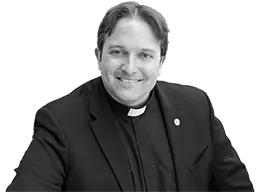
 Fr Matthew Charlesworth SJJesuit PriestSociety of JesusJesuit priest working in Southern AfricaFr. MatthewCharlesworthSJ
 Saturday after Epiphany
Date: | Season: Christmas | Year: A
Responsorial Psalm: Psalm 149:1–5, 6a, 9b
| Response: Psalm 149:4a or Text
Gospel Acclamation: Matthew 4:16
Gospel Reading: John 3:22–30
Preached at: the Chapel of Emerald Hill Children’s Home in the Archdiocese of Harare, Zimbabwe.
Dear brothers and sisters in Christ, the days after Epiphany have shown us who Jesus is through ordinary scenes and real human need. Each day has revealed something practical and close to daily life.
On Monday, Jesus began his public work in Galilee. He announced that the Kingdom of heaven was near and he healed the sick. He was revealed as King, not ruling from a throne but walking among ordinary people, showing that God’s Kingdom is close to those who feel forgotten. We learnt that his Kingdom is larger than we realise, and that it includes many we would not expect.
On Tuesday, in the feeding of the five thousand, he stood among the crowd as Prophet. He took what little was offered, blessed it, and shared it. The people were fed, and nothing was lost. We learnt that God’s word and God’s gifts grow when they are shared, not when they are held back.
On Wednesday, when Jesus walked on the water, he was revealed as God. He stepped onto the chaos and fear of the storm and spoke peace. We learnt that what overwhelms us does not overwhelm him, and that faith grows when we keep our eyes on him rather than the waves.
On Thursday, in the synagogue, he opened the scroll of Isaiah and read of good news for the poor and freedom for the oppressed. He revealed himself as Messiah, sent for those who are tired, burdened, and pushed aside. We learnt that God takes sides, not with the powerful, but with those whose lives are worn thin by daily hardship.
On Friday, when he touched and healed the man with leprosy, he showed himself as High Priest. He did not keep his distance. He restored the man to health, dignity, and community. We learnt that holiness does not avoid suffering, but enters it, and that true worship always restores people to one another.
Today, on this Saturday after Epiphany, Jesus is revealed as Bridegroom. He does not stand apart from his people. He binds himself to them in a covenant that does not depend on our perfection.
The first reading tells us that we can speak to God and be heard. This confidence does not come from having control over life. It comes from belonging to God. John also gives a short warning. Keep yourselves from idols. Anything we trust more than God can quietly drain life from us over time. In our own lives, this can be fear, comfort, money, or silence when something is wrong.
The psalm invites us to notice how God looks at us. The Lord takes delight in his people. When we allow that truth to settle, praise becomes possible, even when life feels fragile.
In the Gospel from John, John the Baptist faces a familiar moment. People are leaving him and going to Jesus. He does not resist it. He knows who he is. He is the friend of the bridegroom. When the bridegroom arrives, his task is done. With quiet clarity he says, He must increase. I must decrease. John’s words are not a rejection of himself. They are a choice. He chooses God’s work over his own success. He leaves us with an honest question: whose Kingdom am I really spending my energy on each day?
This is not about becoming smaller or less human. It is about letting God be God. It is about making space. In daily life, this can mean listening instead of insisting, serving instead of controlling, sharing instead of holding on.
Epiphany ends with a Bridegroom standing among his people. A bridegroom does not arrive to observe, but to commit. God draws close and stays close. Like the bridegroom at Cana, Jesus does not stand on the edge of our lives. He changes them from within. What remains is our response, shown in ordinary choices, ordinary forgiveness, and ordinary patience.
As you pray this morning, consider these questions.
- Where am I being asked to step back so that someone else may grow?
- What do I rely on when trust in God feels difficult?
- What one simple action can I take this week to restore dignity to another person?
Source: https://sj.mcharlesworth.fr/homilies/2026-01jan-10-ya-ct-03/
This homily is shared for personal and pastoral use. Please attribute the author and do not alter the meaning when quoting. If you wish this homily to be translated - there is an option on the website which will allow you to translate it into the language of your choice.
Licenced under a Creative Commons Attribution-NonCommercial-NoDerivatives 4.0 International (CC BY-NC-ND 4.0) license.
The author does not speak for the Society of Jesus or for the Catholic Church.





In preparing this homily, I consulted various resources to deepen my understanding of today’s readings, including using Magisterium AI for assistance. The final content remains the responsibility of the author.