
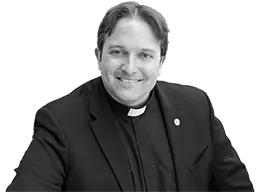
 Fr Matthew Charlesworth SJJesuit PriestSociety of JesusJesuit priest working in Southern AfricaFr. MatthewCharlesworthSJ
 Thursday after Epiphany
Date: | Season: Christmas | Year: A
First Reading: 1 John 4:19–5
Responsorial Psalm: Psalm 72:1–2, 14, 15bc, 17
| Response: Psalm 72:11
Gospel Acclamation: Luke 4:18
Gospel Reading: Luke 4:14–22
Preached at: the Chapel of Emerald Hill Children’s Home in the Archdiocese of Harare, Zimbabwe.
Dear sisters in Christ, when God opens a door, and once that door is opened, a life of truth and mercy must follow.
Our first reading from the First Letter of John reminds us that we love because God loved us first. John is not addressing a crowd drunk on success. He is writing to a community that knows fatigue, misunderstanding, and the quiet strain of fidelity over time. He does not ask them to prove their love with noise or novelty. He asks them to live it. In the Jewish tradition behind this letter, the heart was shaped by repeated choices. Love, practised daily, slowly changes the centre of gravity of a life. John says something bold and practical. When love comes first, the commandments no longer crush us. They clarify us. Faith overcomes the world not by escaping it, but by refusing to let fear, resentment, or weariness have the last word.
The psalm widens that vision beyond the community to the world it serves. Our Psalm is a prayer for rulers, but it is also a mirror held up to anyone entrusted with responsibility. Give the king your justice, O God. Defend the poor. Rescue the weak. In Israel, authority existed for service. A ruler who ignored the vulnerable had misunderstood God entirely. For women vowed to preaching, teaching, healing, and accompaniment, this psalm sounds close to home. It asks whether our structures, our ministries, even our speech, make space for those who struggle to be heard. In Zimbabwe today, where poverty, limited resources, and quiet despair shape many lives, this prayer presses gently but firmly. Justice here is not abstract. It is patience in a classroom, honesty in administration, presence with those who feel forgotten.
The Gospel gathers love and justice into a single moment of revelation. Our Gospel from Luke places Jesus in the synagogue at Nazareth. He reads from Isaiah. The Spirit of the Lord is upon me. Good news for the poor. Freedom for captives. Sight for the blind. The year of the Lord’s favour. His listeners would have recognised the language of Jubilee, that ancient command that debts be cancelled, land restored, and lives reset so that inequality would not harden into destiny. When Jesus says, today this Scripture is fulfilled in your hearing, he claims that God’s mercy is no longer postponed. It has arrived, quietly, in a familiar place, spoken by a familiar voice.
Ignatius would invite us to stay with that scene. Dominic would ask us to listen for the truth that demands to be preached. Imagine the faces in the synagogue. The mix of pride and unease. The long pause after the word today. Let that pause speak to you. Grace often enters without drama, but it never leaves things untouched.
The single image running through these readings is that open door. Love opens the heart. Justice opens community. Christ opens history. Epiphany is not only about light being seen. It is about light exposing where we have grown cautious or comfortable. John shows love opening a way of faithful living. The psalm shows justice opening a society ordered toward the weak. The Gospel shows Jesus opening a Jubilee that continues wherever his word is taken seriously.
For a Dominican community, this Jubilee is lived in truth spoken clearly and compassion practised steadily. It may look like forming young minds to think critically and ethically. It may look like staying with communities long after attention has moved elsewhere. It may mean preaching hope in places where disappointment has become normal. These acts are small on the surface, but they change the shape of the world.
The strength for this does not come from effort alone. We love because God loved us first. The door has already been opened. Faith overcomes the world by remaining truthful, tender, and tenacious.
As we come to the altar, we also carry the wider Church in our prayer. We pray today for the Cardinals gathered in extraordinary consistory with Pope Leo. May the Spirit who anointed Christ guide their listening, steady their discernment, and open paths of unity, peace, and courage for the good of the whole Church.
As you pray tonight, ponder these three questions.
- Where in my vowed life has God’s love already opened a door that I am tempted to keep half closed?
- In my preaching, teaching, or service, who is being lifted up and who might still be waiting to be seen?
- If Christ were to stand in our community today and say today, what truth would he be asking us to speak more clearly, and what mercy to live more fully.
Source: https://sj.mcharlesworth.fr/homilies/2026-01jan-08-ya-ct-03/
This homily is shared for personal and pastoral use. Please attribute the author and do not alter the meaning when quoting. If you wish this homily to be translated - there is an option on the website which will allow you to translate it into the language of your choice.
Licenced under a Creative Commons Attribution-NonCommercial-NoDerivatives 4.0 International (CC BY-NC-ND 4.0) license.
The author does not speak for the Society of Jesus or for the Catholic Church.





In preparing this homily, I consulted various resources to deepen my understanding of today’s readings, including using Magisterium AI for assistance. The final content remains the responsibility of the author.