
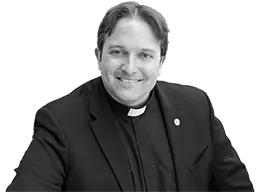
 Fr Matthew Charlesworth SJJesuit PriestSociety of JesusJesuit priest working in Southern AfricaFr. MatthewCharlesworthSJ
 Wednesday after Epiphany
Date: | Season: Christmas | Year: A
First Reading: 1 John 4:11–18
Responsorial Psalm: Psalm 72:1–2, 10, 12–13
| Response: Psalm 72:11
Gospel Reading: Mark 6:45–52
Preached at: the Chapel of Emerald Hill Children’s Home in the Archdiocese of Harare, Zimbabwe.
Dear sisters, today’s readings remind us that when fear rises and the work feels heavy, Jesus shows us who he truly is, and he does not keep his distance.
Our first reading from the First Letter of John is very direct. God has loved us first, so we must love one another. John is not speaking about feelings or ideals. He is speaking about how fear is healed. Fear grows where people expect to be rejected, blamed, or forgotten. Love drives fear out when it is faithful, concrete, and willing to stay.
This touches the daily reality of the children in your care. Orphaned children often carry the fear that people leave. Deaf children can learn, without anyone meaning to teach them, that the world will not slow down enough to understand them. Fear then shows itself as anger, silence, restlessness, or refusal. John reminds us that Christian love is not mainly about being kind when it is easy. It is about staying when it is hard. And he makes a strong claim: when we love like this, God remains in us. God is not distant from the classroom or the playground. God is already there.
The Psalm today shows us what God values in authority. This king is praised because he hears the cry of the poor, rescues those with no one to help them, and treats the weak as precious. In Scripture, power is always tested by how it treats the most vulnerable.
So when you insist that every child deserves patience, clarity, and respect, you are living this Psalm. When you slow down because communication takes time, you are living this Psalm. When you see an orphan not as a problem to be managed but as a person to be formed, you are living this Psalm. This is what God’s justice looks like when it takes flesh.
The Gospel from Mark brings us to the centre of Epiphany. The disciples are in the boat at night, rowing against the wind. They are exhausted. They are doing what they were asked to do, and it is still difficult. Scripture is honest about that.
Then Jesus comes towards them, walking on the sea. In the Bible, the sea often stands for chaos and danger. Job says that God alone “treads upon the waves of the sea.” When Jesus walks on the water, Mark is not only telling us that Jesus has power. He is revealing who Jesus is. This is an epiphany. The God who rules over chaos is now present in human flesh.
Mark adds a striking detail. Jesus meant to “pass by” them. In the Old Testament, when God passes by Moses or Elijah, it is a moment of revelation, a way God makes himself known without overwhelming the person. This is not just a rescue. This is God drawing near.
Jesus then says, “Take heart, it is I; do not be afraid.” The words sound simple, but in this setting they carry deep weight. Jesus names his presence in the midst of fear. And when he gets into the boat, the wind drops. Not because the disciples suddenly understand, but because they are no longer alone.
This Word finds a quiet echo in the life of Saint Raymond of Peñafort, whose memorial we keep today. Raymond spent his life teaching, guiding consciences, and bringing order where there was confusion. He worked patiently with difficult cases and complicated lives. One tradition remembers him crossing the sea in trust when there seemed no other way forward. Whether dramatic or quiet, his life reflects the same faith we hear in today’s Gospel: when the path is unclear and the waters feel unsafe, trust God’s presence and keep going.
For those who teach, care, repeat lessons, manage frustration, and return again and again to the same children, this Gospel gives us something firm to stand on. The one beside you in fatigue and confusion is not only compassionate. He is God-with-us. He may not remove every difficulty at once, but his presence changes what the difficulty becomes.
As we carry this Word into prayer, three questions to stay with us.
- Where in my work or community life am I most tired or afraid, and have I brought that honestly to the Lord?
- Which child is God asking me to love with greater patience and consistency today?
- And as I look back at the end of the day, where did I notice that the Lord was already present in the boat with me?
Source: https://sj.mcharlesworth.fr/homilies/2026-01jan-07-ya-ct-03/
This homily is shared for personal and pastoral use. Please attribute the author and do not alter the meaning when quoting. If you wish this homily to be translated - there is an option on the website which will allow you to translate it into the language of your choice.
Licenced under a Creative Commons Attribution-NonCommercial-NoDerivatives 4.0 International (CC BY-NC-ND 4.0) license.
The author does not speak for the Society of Jesus or for the Catholic Church.





In preparing this homily, I consulted various resources to deepen my understanding of today’s readings, including using Magisterium AI for assistance. The final content remains the responsibility of the author.