
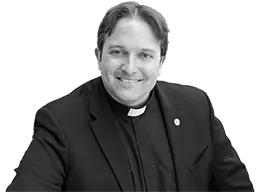
 Fr Matthew Charlesworth SJJesuit PriestSociety of JesusJesuit priest working in Southern AfricaFr. MatthewCharlesworthSJ
 Solemnity of the Epiphany of the Lord
Date: | Season: Christmas | Year: A
First Reading: Isaiah 60:1–6
Responsorial Psalm: Psalm 72:1–2, 7–8, 10–11, 12–13
| Response: Psalm 72:11
Second Reading: Ephesians 3:2–3a, 5–6
Gospel Acclamation: Matthew 2:2
Gospel Reading: Matthew 2:1–12
Preached at: the Chapel of Emmaus House in the Archdiocese of Harare, Zimbabwe.
This feast reminds us that God does not wait for us to belong before coming close, but meets us while we are still searching, travelling, and asking questions.
Dear brothers and sisters in Christ, Epiphany places before us a simple but demanding image: a light seen at a distance, and people who decide it is worth the journey. Not people who are certain or have all the answers, but travellers who notice something shining and refuse to ignore it. Today is not simply another day within Christmas, but the moment when its meaning is fully revealed: the child born in Bethlehem is born for the whole world.
Our first reading from the prophet Isaiah was spoken to a people who knew long nights. Jerusalem had been weakened by exile and disappointment, and many had learned how to survive without expecting too much. Into that weary place Isaiah speaks a daring word: “Arise, shine, for your light has come.” He does not deny the darkness; he proclaims that God’s glory is already rising within it.
What follows is a vision of gathering. Nations walk towards the light. Peoples are drawn in. Camels arrive, carrying gold and frankincense. The light does not force itself upon anyone; it draws hearts and steps. Isaiah shows us that when God’s people live with faith, justice, and mercy, they become visible in the world—not because they seek attention, but because something of God’s own life is reflected through them. The prophet points towards a future where the nations will share in God’s promise, walking together into the light.
In Zimbabwe today, many carry economic strain, uncertain futures, fragile institutions, and the weariness of waiting too long for change. Isaiah offers no quick answers. He calls God’s people to stand upright again, to live so that hope remains visible, dignity is not surrendered, and the poor are not pushed further into the shadows. In a world marked by war—in Gaza, Ukraine and elsewhere—even a small light matters when the night has gone on too long. The Church is called not only to endure, but to recognise the quiet searches already unfolding and to walk patiently with them towards Christ.
The psalm deepens this vision by describing the kind of king God desires: one who governs with fairness, hears the cry of the poor, and stands with those who have no defender. Under his reign, peace spreads like rain soaking dry ground. As we pray these words, they question us. They ask what kind of power we admire, and what kind of people we are becoming in our homes, communities, and nation.
The Gospel from Matthew brings this light into a particular place and time. Magi arrive from the East—foreigners, outsiders, men who read the heavens rather than the Law. Yet the stirring of their hearts is no accident. The same Spirit who moved over the waters at creation has stirred their restlessness and set them on the road. Creation itself speaks to them, awakening a desire they can no longer ignore.
They follow the star, but it does not do everything for them. When they reach Jerusalem, the light falters, and they need the words of Scripture to find the way to Bethlehem. Creation awakens their search; God’s Word completes it. Herod’s palace shines with power but offers no guidance. It is the promise spoken long ago that puts the travellers back on the road.
Here we meet one of the great truths of this feast. Christ is made known first not to those who consider themselves insiders, but to those on the margins. From the beginning, Jesus is shown to be a gift for everyone. In the Magi, the nations begin their long walk towards Christ—the first fruits of a procession that has never stopped, as generation after generation is drawn, often without knowing his name, towards the light of God’s mercy. Matthew will end his Gospel by sending the disciples to all nations; here at the beginning he shows the nations already on the move. In God’s design, no one is excluded, and the Church exists to keep that invitation visible.
When the Magi reach the child, they kneel and open their treasures. Gold for a king. Frankincense for the Holy One. Myrrh for a life that will know suffering. In these gifts they confess, even before they fully understand, who this child is: ruler not by force, God who draws close, and a saviour who will walk the road of human pain. Then comes a quiet turning point. Warned in a dream, they return home by another road. Encountering Christ does not always change our circumstances, but it does change our direction. They carry this encounter back into their own lands, becoming the first witnesses that something new has begun.
The second reading from the Letter to the Ephesians names clearly what the other readings show through image and story. Paul speaks of a mystery, hidden for generations, now revealed by the Spirit: that the Gentiles are not guests or latecomers, but full heirs, members of the same body, sharers in the same promise in Christ. What Isaiah saw from afar, and what the Magi acted out on the road, Paul now proclaims with confidence. God’s saving plan was never meant for a few, but for all. In a country marked by division and uneven belonging, this reading insists that in Christ no one stands on the margins, and no one is asked to wait their turn.
Ignatian spirituality invites us to pause here and enter the scene: the long road, the watching of the sky, the mixture of fear and hope, and the stillness of that house in Bethlehem. It also invites us to notice what stirs within us—what draws us outward in trust, generosity, and courage, and what pulls us inward into fear, resentment, or weariness. As Ignatius discovered, some choices leave us restless and closed in, while others bring a quieter joy that opens us to God and to others. Epiphany invites us to read the events of our own days as carefully as the Magi read the sky.
So this feast leaves us with simple but searching questions. What star do we follow? Is it the star of security and survival, which can narrow our vision, or the quieter light of Christ, which draws us beyond ourselves and towards others, especially those easily overlooked? In a country where it is tempting to close in on what little we have, the Gospel calls us to keep our hearts open.
Epiphany also asks something concrete. What gifts might we bring and offer to the Lord this year, so that others may find their way to him? Not gold locked away, but time given patiently. Not incense offered briefly, but prayer held faithfully. Not myrrh avoided, but daily sacrifices accepted with love. What we place before Christ shapes who we become, and how others encounter him through us.
The Magi did not know where the star would finally lead when they set out. They only knew it was worth following. God often works with us in the same way, offering enough light for the next step, not the whole map.
As we celebrate this feast, let us ask for the grace not only to notice the light, but to walk by it, and to become, in our ordinary lives, signs that Christ has truly come for everyone.
As we carry this into the week ahead, let us pray with three questions:
- What star am I following at this stage of my life, and where is it really leading me?
- What gifts am I being asked to offer this year, so that others may find their way to Christ?
- After meeting Christ, what path do I need to leave behind, and what new way is opening before me?
Source: https://sj.mcharlesworth.fr/homilies/2026-01jan-04-ya-ct-03/
This homily is shared for personal and pastoral use. Please attribute the author and do not alter the meaning when quoting. If you wish this homily to be translated - there is an option on the website which will allow you to translate it into the language of your choice.
Licenced under a Creative Commons Attribution-NonCommercial-NoDerivatives 4.0 International (CC BY-NC-ND 4.0) license.
The author does not speak for the Society of Jesus or for the Catholic Church.




In preparing this homily, I consulted various resources to deepen my understanding of today’s readings, including using Magisterium AI for assistance. The final content remains the responsibility of the author.