
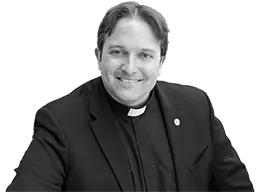
 Fr Matthew Charlesworth SJJesuit PriestSociety of JesusJesuit priest working in Southern AfricaFr. MatthewCharlesworthSJ
 Fifth Day in the Octave of Christmas
Date: | Season: Christmas | Year: A
First Reading: 1 John 2:3–11
Responsorial Psalm: Psalm 96:1–3, 5b–6
| Response: Psalm 96:11a
Gospel Acclamation: Luke 2:32
Gospel Reading: Luke 2:22–35
Preached at: the Chapel of Emmaus House in the Archdiocese of Harare, Zimbabwe.
This morning’s readings speak of how God teaches us, slowly and patiently, to recognise the light by learning how to love.
Dear brothers in Christ, these days within the Octave of Christmas have the feel of a long, quiet gaze. The feast itself has passed, the noise has subsided, and what remains is the child, still wordless, still vulnerable, still asking us to look again. The Church dwells here on purpose. She knows that the mystery of the Word made flesh cannot be hurried.
Our first reading, from the First Letter of John, speaks with the authority of someone who has lived long with the Lord. There is nothing ornamental here. John writes as a pastor who has seen faith mature and faith unravel. To know God, he says, is not to possess an insight but to keep a way. Knowledge, in the Johannine sense, is never detached. It is relational, tested by time, proven in love. The commandment to love is old because it belongs to the first covenant, and new because it has been embodied. What once stood written on stone now breathes in human flesh. Light, for John, is not brilliance or intensity. It is truth lived without division. To claim communion with God while refusing communion with one another is to fracture oneself. Darkness, here, is not malice so much as self-deception.
The psalm allows that same truth to widen. Psalm 96 does not invite us inward but outward. Let the heavens rejoice. Let the earth be glad. Israel knew that when God draws near, the whole created order is involved. This is not pious exaggeration. It is sound theology. Creation was made through the Word, and when the Word enters creation, it recognises its own source. Praise, then, is not escape from the world’s weight but a declaration that the world still belongs to God. Glory and beauty are not abstractions. They are signs that the Lord has not abandoned what he has made. That, through Emmanuel, God is with us.
Luke’s Gospel draws us into the temple, to a moment that feels both ordinary and immense. Mary and Joseph come to fulfil the law. They offer what the poor could offer. Luke is careful here. The Messiah is introduced to Israel not through triumph but through obedience. Behind this simple action lies a long memory. The firstborn belongs to God. From the days of the Exodus, when Israel’s firstborn were spared in Egypt, the people knew that life saved is life claimed. To present the firstborn was to acknowledge that everything begins with mercy.
Yet Luke notices something striking. He speaks of Jesus being presented and consecrated, but not redeemed. No payment is mentioned. No release from service is described. Other firstborn sons were bought back, returned home, their priestly role taken up by another. This child is not. He is given over, not reclaimed. Even the sacrifice mentioned is not for the child, but for the mother. The one who carried the Holy One is treated like the holy vessels of the Temple, purified not because of sin, but because she has borne glory. Quietly, Luke lets us see what words cannot yet say. This firstborn will remain offered. He will not be redeemed away from his priestly work. He will become the gift.
All of this gathers gently into Simeon’s arms. Simeon stands for a lifetime of waiting. His name means one who hears. He has learned to listen long enough to recognise God when God arrives without announcement. When he takes the child, salvation is no longer an idea. It has weight. It can be held. And yet his blessing does not spare Mary the truth. This child will bring division. Light reveals as much as it consoles. Love uncovers resistance.
There is a numerical poetry here that Luke’s first readers would have sensed. From the annunciation to Zechariah to this day in the Temple, four hundred and ninety days have passed. Seventy times seven. A number echoing mercy. The end of exile. The forgiveness that does not count the cost. The child presented today is already the mercy of God in the flesh.
For those formed by the Spiritual Exercises, this is a scene to enter rather than explain. Ignatius would ask us to notice the pace, the gestures, the inner movements. Simeon’s joy is real, but it is sober joy. It is the joy of someone who has waited long enough to trust that God keeps promises, though never in the way we expect.
It is not difficult to see why the Church remembers Saint Thomas Becket in these days. His life shows how fidelity ripens slowly. His obedience narrowed his options until only one remained. Like the firstborn of old, he belonged to God before he belonged to any power. His martyrdom was not defiance, but consecration brought to its end, a life not reclaimed, but given.
Here in Zimbabwe, the Church lives by that same patience. Many are tired. Years of economic strain have trained people in endurance more than optimism. Yet the light John speaks of does not depend on circumstances. It depends on love that persists. When people share what little they have, when priests remain with communities that can offer little in return, when hope refuses to die quietly, the light is not lost. It is refined.
For us, as Jesuits who have lived many years within the priesthood of Christ, this Gospel speaks with a particular intimacy. Through baptism and ordination, we were presented to the Lord. Not redeemed away from service, but drawn into it. Day after day, often without notice, we have stood in for others. We have offered prayers on behalf of people who could not pray.
I leave you with three questions for prayer in the days ahead.
- Where, after many years of service, is the Lord inviting me to love with greater simplicity?
- What truth about Christ have I come to recognise only through time and perseverance?
- As I look back over my life, where do I see mercy multiplying, again and again, even when the way forward was unclear?
Source: https://sj.mcharlesworth.fr/homilies/2025-12dec-29-ya-ct-02/
This homily is shared for personal and pastoral use. Please attribute the author and do not alter the meaning when quoting. If you wish this homily to be translated - there is an option on the website which will allow you to translate it into the language of your choice.
Licenced under a Creative Commons Attribution-NonCommercial-NoDerivatives 4.0 International (CC BY-NC-ND 4.0) license.
The author does not speak for the Society of Jesus or for the Catholic Church.





In preparing this homily, I consulted various resources to deepen my understanding of today’s readings, including using Magisterium AI for assistance. The final content remains the responsibility of the author.