
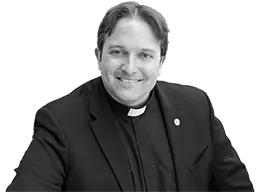
 Fr Matthew Charlesworth SJJesuit PriestSociety of JesusJesuit priest working in Southern AfricaFr. MatthewCharlesworthSJ
 Feast of the Holy Family of Jesus, Mary and Joseph
Date: | Season: Christmas | Year: A
First Reading: Sirach 3:2–6, 12–14
Responsorial Psalm: Psalm 128:1–5
| Response: Psalm 128:1
Second Reading: Colossians 3:12–21
Gospel Acclamation: Colossians 3:15a, 16a
Gospel Reading: Matthew 2:13–15, 19–23
Preached at: the Chapel of Emerald Hill Children’s Home in the Archdiocese of Harare, Zimbabwe.
Dear brothers and sisters in Christ, it is good to be with you this morning. Today’s feast touches something very close to the heart of African life. God chooses to come to us through family — not only the small household, but the wider family that carries us, names us, and does not let us face life alone.
The Gospel places us with a family under threat. A family we often idealise, but here we meet them under pressure. Joseph is warned in a dream that danger is near. The child’s life is at risk. He does not delay. He gathers Mary and the child and leaves in the night for Egypt. This is fatherly care in action — protecting and providing when the road is uncertain and the future unclear. Mary trusts, not because the journey will be easy, but because she knows God keeps promises. And the child Jesus, helpless now, is already learning obedience — the same obedience Luke will later describe when he lives quietly under their care in Nazareth.
We can imagine the journey. A young family moving quickly and quietly, trusting that somewhere ahead there will be help. They survive not by strength alone. Others make space for them. Someone offers shelter. Someone shares food. Someone chooses kindness. God’s Son grows because a wider world opens its doors.
This fits naturally within African life. When danger comes, a family does not face it alone. If a home becomes unsafe, a child is sent to an aunt. If parents struggle, grandparents step in. If illness strikes, cousins and neighbours gather. Survival is shared. God chooses to be saved by community.
Family in the Gospel is not only about blood. Some bonds are chosen. A neighbour becomes an aunt. A community becomes home. These are not lesser families. They are real families, held together by love rather than DNA.
Egypt, in Matthew’s telling, carries a bitter memory. It was once a place of slavery. Now it becomes a place of refuge. Nothing about Egypt has changed; the child’s need has. A place marked by fear becomes the place where life is preserved.
Many families in Zimbabwe recognise this movement. People move not because they want to, but because staying would cost too much. Others live year after year with illness, sustained not by optimism, but by discipline, care, and steady faithfulness. Not every family matches an ideal pattern. Some are wounded, stretched, or incomplete. Yet no family, no person, is outside God’s concern. God does not wait for order before entering; he enters what is fragile in order to heal.
The Gospel does not explain such lives. But it always places God there. God does not watch from a distance. At Christmas we are given the name that tells us why: Emmanuel — God with us.
Matthew is also doing something more. He presents Jesus as a new Moses. Just as Pharaoh once sought the life of the first liberator, Herod seeks the life of this one. Just as Moses fled danger and later returned, so too does Jesus. From the beginning, his life is marked by danger, displacement, and deliverance.
Throughout these Christmas days, Scripture returns to the same test: whether we choose love or fear. Herod rules by fear; the Holy Family survives by trust and obedience. Family life exposes what lies in the heart — whether we protect life or threaten it, whether we choose patience or control.
The first reading from Sirach speaks from deep wisdom, but not as a burden. The Law is God’s gift — a way of staying close to God in ordinary life. That is why honouring father and mother is practical, not sentimental: caring for them when their strength fails; not abandoning them when they become dependent. This assumes an extended household, where dignity is protected by those who remain close. It is deeply African.
The psalm speaks of blessing. Children are like olive shoots around the table — many shoots, a shared life. Olive trees grow slowly. They survive drought. They bear fruit for years. The psalm does not promise life without strain, but it does promise fruitfulness for those rooted in the ways of the Lord. And this fruit is more than biological. Families hand on faith, courage, memory, and hope — often through those who choose to care. And for any child who has lost parents or been separated from family, this psalm says clearly: you are not forgotten, you are planted by God, and your life is meant to bear fruit.
In our second reading, Saint Paul turns faith into daily practice: kindness, patience, forgiveness, peace. His concern is not control, but care. Authority must be shaped by service. Family life becomes the place where love is learned through daily acts of self-giving. Compassion and forgiveness are not optional; they are the habits of those who belong to Christ.
The Church calls the family a domestic church. Not because it is perfect, but because Christ chooses to dwell there. When families pray, forgive, and remain faithful under strain, ordinary life is offered to God. That is why the Church is a family of families — including those whose strongest bonds are chosen rather than inherited. When blood ties fail, grace creates new ones.
Taken together, the message is clear. God chooses to grow within family life shaped by shared responsibility. Joseph’s care, Mary’s trust, and Jesus’ obedience form a pattern that sustains life and reveals God in ordinary relationships. This is deeply African: my child is your child; my burden is not mine alone.
This feast speaks to us at a time when individualism weakens communal bonds. Many families carry heavy concerns — health, school fees, uncertain work, homes stretched by illness or loss. Some houses are full; others are painfully quiet. The feast of the Holy Family reminds us that God enters real homes, real families, real strain. And the message we hear is simple: do not be afraid.
It also reminds us that the Church must be a place of belonging — where children are helped to grow, the sick are supported, and joys and griefs are carried together.
Today this feast widens our prayer. We think of families caught between warring neighbours — including Russians and Ukrainians, Jews and Palestinians — where fear has hardened hearts and violence has become normal. Children learn too early what no child should have to know. Homes are lost. Trust is broken. The Gospel gives no easy answers, but it does give a direction: choose life, choose mercy, refuse to let fear have the final word.
Today we give thanks for our families, imperfect as they are. Let us entrust them quietly to God. Let us ask the Holy Family of Nazareth to bless our homes, strengthen what is weak, and teach us how to love as Christ loved.
As we go forward, let us consider these questions:
- How am I living Joseph’s care, Mary’s trust, or Jesus’ obedience in my own family life?
- Where am I called to strengthen the wider family God has given me, especially where illness, poverty, or loneliness weighs heavily?
- And when family life feels uncertain, do I trust that God is still present, working quietly through our care for one another?
Source: https://sj.mcharlesworth.fr/homilies/2025-12dec-28-ya-ct-02/
This homily is shared for personal and pastoral use. Please attribute the author and do not alter the meaning when quoting. If you wish this homily to be translated - there is an option on the website which will allow you to translate it into the language of your choice.
Licenced under a Creative Commons Attribution-NonCommercial-NoDerivatives 4.0 International (CC BY-NC-ND 4.0) license.
The author does not speak for the Society of Jesus or for the Catholic Church.





In preparing this homily, I consulted various resources to deepen my understanding of today’s readings, including using Magisterium AI for assistance. The final content remains the responsibility of the author.