
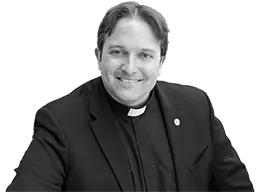
 Fr Matthew Charlesworth SJJesuit PriestSociety of JesusJesuit priest working in Southern AfricaFr. MatthewCharlesworthSJ
 Solemnity of the Nativity of the Lord (Dawn)
Date: | Season: Christmas | Year: A
First Reading: Isaiah 62:11–12
Responsorial Psalm: Psalm 97:1, 6, 11–12
Second Reading: Titus 3:4–7
Gospel Acclamation: Luke 2:14
Gospel Reading: Luke 2:15–20
Preached at: the Chapel of Emmaus House in the Archdiocese of Harare, Zimbabwe.
This morning tells us that God enters the world quietly, chooses the poor, and asks us to return to our lives changed.
Dear brothers and sisters in Christ, Christmas at dawn meets us before the day has properly begun. The world is still tired. Some worries have not yet lifted. Some hopes still feel fragile. And it is into this moment, not when everything is resolved, that God comes among us.
Our first reading from the prophet Isaiah is spoken to people who know disappointment well. They have returned from exile, but life is still hard. The city is not yet rebuilt. Justice is not yet secure. And yet God says, “Your salvation comes.” Not tomorrow. Not once everything is fixed. Now. Then comes something striking. God gives them new names. They are called Holy People, Redeemed, Sought Out. In the world of the Bible, names tell the truth about who you are. To rename someone is to restore their worth. Isaiah is saying that God does not wait for perfection before offering dignity. God begins by telling the truth about who the people really are.
The psalm takes that promise and spreads it wider. “The Lord is king. Let the earth rejoice.” This is not a claim about force, but about trust. The psalm says that justice and right are the foundation of God’s rule. Not strength. Not violence. Justice. And then a quiet image follows. “Light is sown for the just.” Light is not switched on all at once. It is planted, like seed in dark soil. You do not see it immediately, but it grows. This is how God works in history and in human hearts. Slowly. Faithfully. Often unnoticed.
We hear the same pattern in the letter to Titus. Paul does not begin with commands. He begins with kindness. “When the kindness and love of God appeared.” Salvation does not arrive because we behaved better or understood more. It comes because God chose mercy. God saves us not from a distance, but by drawing close, washing us, renewing us, and staying with us. Christmas is not God standing above us. It is God stepping into our lives.
Then Luke brings us to the shepherds. They are not powerful. They are not educated. They work night shifts. They smell of animals. And yet they speak to one another and decide, “Let us go and see.” Faith often begins there — not with certainty, but with a willingness to look more closely.
What they find is not impressive. A child. A feeding trough. Tired parents. Dawn light falling on poverty. Nothing matches the grandeur of the angels’ song. And yet they return glorifying and praising God. This is the work of faith: learning to see more than what is obvious, to recognise God’s presence where the world sees only smallness.
Mary shows us how to do this. She does not explain. She does not rush. She keeps these things and ponders them in her heart. Faith is not always about answers. Sometimes it is about staying present long enough for God to speak.
The shepherds leave, but they return to the same fields, the same work. Christmas does not remove them from reality. It sends them back into it with new eyes. That matters for us. Many people here live with pressure, uncertainty, and fatigue. In Zimbabwe in 2025, families worry about food prices, health care, work, and the future of their children. Some feel invisible. Some feel forgotten.
Christmas at dawn says that God chooses this world as it is. God chooses a feeding trough. God chooses working people. God chooses the hour when hope feels faint. If God enters life this way, then no person is beneath dignity. No struggle is ignored. No ordinary life is wasted.
And this morning, that same Christ is not only remembered — he is given. As we come to this altar, the child of Bethlehem places himself again into our hands. Not as a reward for the strong, but as food for the hungry. God’s closeness does not end at the manger. It continues here.
This truth asks something of us. If God restores dignity, then we must be careful how we speak about others. If God sides with the overlooked, then our choices must reflect that — how we spend, how we vote, how we treat workers, how we notice those who are tired or excluded. Joy that stays private is not the joy of Christmas.
Today we celebrate the birth of Christ, the one who chose smallness. Do we resist that simplicity? Do we wish God were more impressive? Or do we sense an invitation to live more honestly, more gently, more courageously?
Christmas morning is not about escape. It is about commitment. God has entered the world, and now the world matters more than ever. The shepherds show us the pattern. They go and see. They praise God. And then they return to their lives changed.
As the day unfolds, may we carry that pattern with us. May we notice where light is being planted, even when we cannot yet see it. May we protect the dignity God has already given to every person we meet. And may our faith shape how we live when the celebration is over.
This Christmas, the Holy Father has again pleaded with the world not to grow accustomed to war, violence, and division. Peace, he reminds us, does not begin with treaties alone. It begins in hearts that refuse to harden. The child in the manger does not shout peace into the world; he entrusts it to us — in how we speak and listen, in how we resist hatred, and in how we protect the vulnerable. If Christ is born among us, then peace must be born there too — in families, in communities, and in nations weary of fear.
Peace begins where we decide not to pass on fear, resentment, or contempt, even when the world tells us this is normal. So I leave you with three questions for the days ahead:
- Where in my life is God inviting me to stop, look closely, and listen rather than rush on?
- Who around me feels overlooked, and what simple action could restore their dignity this week?
- When I return to my ordinary work and responsibilities, what does Christmas ask me to do differently?
May the God who chose the manger teach us how to live faithfully, gently, and courageously in the world we are given.
Source: https://sj.mcharlesworth.fr/homilies/2025-12dec-25-ya-ct-01b/
This homily is shared for personal and pastoral use. Please attribute the author and do not alter the meaning when quoting. If you wish this homily to be translated - there is an option on the website which will allow you to translate it into the language of your choice.
Licenced under a Creative Commons Attribution-NonCommercial-NoDerivatives 4.0 International (CC BY-NC-ND 4.0) license.
The author does not speak for the Society of Jesus or for the Catholic Church.





In preparing this homily, I consulted various resources to deepen my understanding of today’s readings, including using Magisterium AI for assistance. The final content remains the responsibility of the author.