
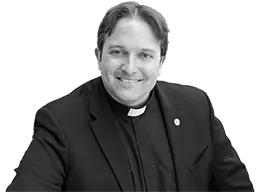
 Fr Matthew Charlesworth SJJesuit PriestSociety of JesusJesuit priest working in Southern AfricaFr. MatthewCharlesworthSJ
 Solemnity of the Nativity of the Lord (Vigil)
Date: | Season: Christmas | Year: A
First Reading: Isaiah 62:1-5
Responsorial Psalm: Psalm 89:4-5, 16-17, 27, 29
| Response: Psalm 89:2a
Second Reading: Acts 13:16-17, 22-25
Gospel Acclamation: Tomorrow the wickedness of the earth will be destroyed the Saviour of the world will reign over us.
Gospel Reading: Matthew 1:1-25
Preached at: the Chapel of Emmaus House in the Archdiocese of Harare, Zimbabwe.
Dear brothers and sisters in Christ, tonight we stand before a mystery: God keeps his promises by coming among us as a silent child, asking not to be explained but to be welcomed.
As Advent reaches its final watch tonight, Christmas Eve does not begin with noise or drama. It begins with wonder. God does not arrive with arguments or commands. The eternal Word comes as a baby, unable to speak, needing to be held. Before God teaches us anything, God places himself in our hands. That is the first joy of Christmas.
The Scriptures tonight tell one long story of waiting, and of a God who refuses to give up. Isaiah speaks to people who believed their best days were behind them. Jerusalem had known loss and shame. Yet God says, I will not be silent. You will be given a new name. No longer Forsaken. No longer Desolate. You will be called My Delight. This is not just comfort. It is joy. Like a bridegroom delighting in his bride, God delights in his people. Christmas is God taking joy in us again.
That joy finds its voice in the psalm we sing, “I will sing forever of your mercies, O Lord.” It is not the song of people who have had an easy life. It is the song of those who have waited and suffered, and still believe that God is faithful. The promise made to David runs quietly through the generations. Some kept faith. Some failed. God did not. Christmas is not God changing direction. It is God keeping his word.
Saint Paul, speaking in the Acts of the Apostles, tells that same story in another way. From Abraham, through Egypt, through David, all the way to John the Baptist, God has been patiently at work. Faith grows by remembering. When hope feels thin, God asks us to look back and notice how often mercy has already carried us this far.
The Gospel according to Matthew gathers all of this into one human family. We hear a long list of names, like the great vigil readings of Easter, where light slowly moves through history until Christ appears. These are not perfect people. They are real people. And then Matthew slows us down and shows us Joseph. A just man. A quiet man. Confused. Afraid. Ready to step aside. In a dream, God says only this: Do not be afraid. Joseph says nothing. He listens. He trusts. He acts. He welcomes Mary. He names the child Jesus. God saves. Salvation begins without speeches, without force, with quiet obedience.
The acclamation gives us the promise that follows. Tomorrow the wickedness of the earth will be destroyed. The Saviour of the world will reign over us. But tonight, that reign begins in weakness. Love enters the world where it can be refused, ignored, or held close.
Ignatius would ask us to stay here for a moment. To imagine the night. The silence. Joseph awake with his thoughts. Mary trusting God with her whole life. The child, small and still. Where are you in this scene? What stirs in you?
This mystery matters because so many of us are still waiting. Waiting for healing. Waiting for peace. Waiting for fairness in our families, our communities, our country. Christmas does not tell us to stop caring. It tells us that God has entered our waiting. That no life is forgotten. That dignity does not depend on strength or success.
This Christmas, the Holy Father has asked the world to pause and to choose peace. That appeal fits this night. The child before us does not carry weapons or threats. He brings peace by drawing close. In a world marked by war, anger, and fear, peace begins where hearts soften, where enemies are no longer faceless, where we refuse to pass on bitterness. The peace the angels promise is not loud or quick. It begins when we let Christ disarm us.
Tonight, the mystery comes even closer. This same child comes to us under the simple signs of bread and wine. The Jesus whom Joseph welcomed into his home places himself in our hands. As Joseph received him with trust, so are we invited to receive him now, and to let his peace take root in us.
As you go into this week, I invite you to pray with three simple questions.
- Where is God quietly saying to me, Do not be afraid?
- What promise of God do I need to remember when waiting feels heavy?
- Whom is Christ asking me to welcome or protect this Christmas, beginning with how I receive him in the Eucharist?
Source: https://sj.mcharlesworth.fr/homilies/2025-12dec-24-ya-ct-01/
This homily is shared for personal and pastoral use. Please attribute the author and do not alter the meaning when quoting. If you wish this homily to be translated - there is an option on the website which will allow you to translate it into the language of your choice.
Licenced under a Creative Commons Attribution-NonCommercial-NoDerivatives 4.0 International (CC BY-NC-ND 4.0) license.
The author does not speak for the Society of Jesus or for the Catholic Church.





In preparing this homily, I consulted various resources to deepen my understanding of today’s readings, including using Magisterium AI for assistance. The final content remains the responsibility of the author.